
Community
Polling guru reports massive shift across all 50 states in midterms: ‘A huge mandate’
By David Robinson
Advertisement · Why this ad?
David graduated from Franklin & Marshall College and has been a community journalist for over 8 years, previously working at the Lancaster Examiner. He focuses on the heart of Lancaster, covering local events, festivals, and community initiatives.
More from David →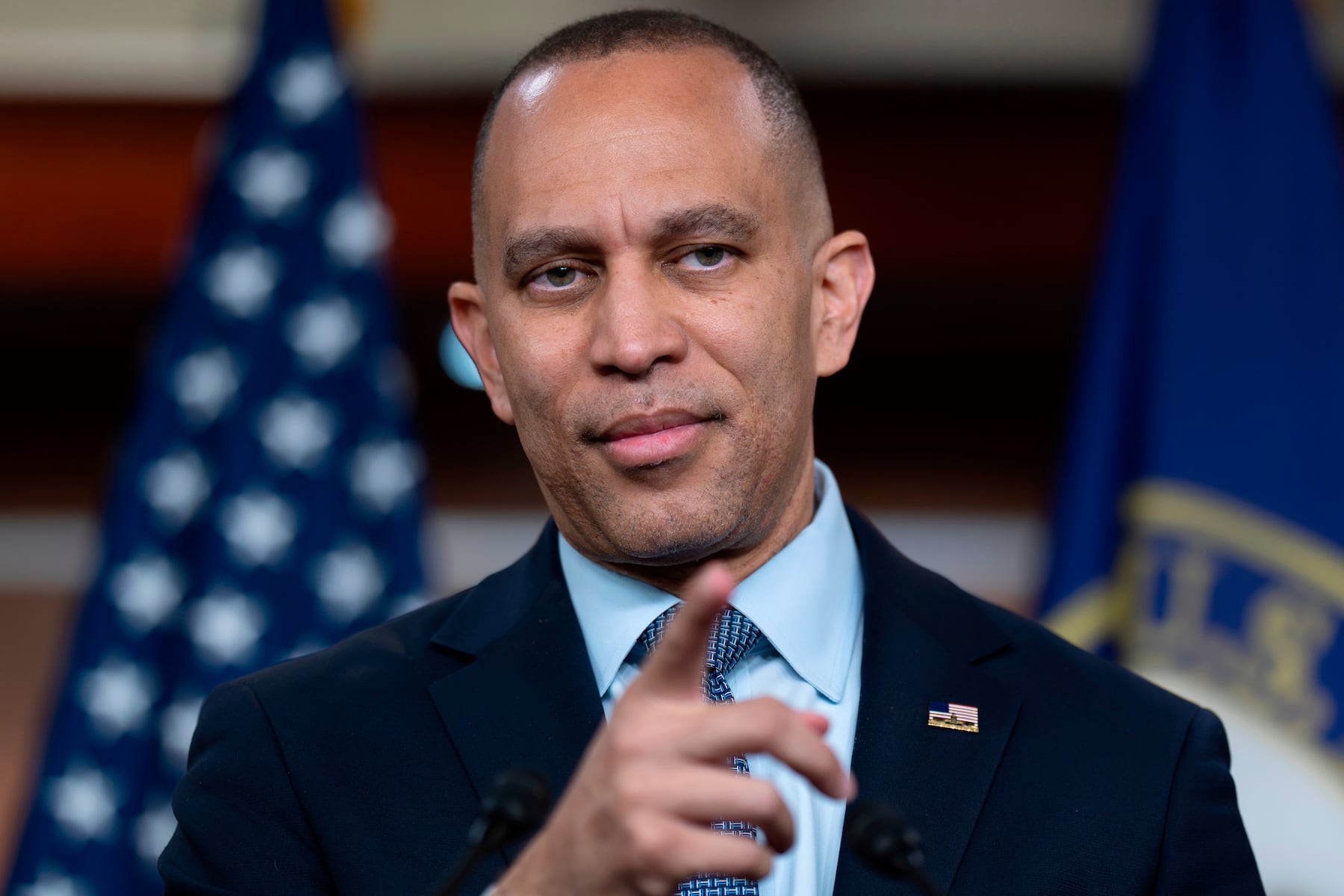
On a quiet afternoon in Lancaster, a familiar scene unfolded—neighbors gathered at the local coffee shop, discussing the latest political developments that ripple through Washington and reach right into our community. Among those conversations was the unexpected involvement of a Hollywood A-lister, whose name might surprise many: a well-known actor has stepped into the national spotlight, voicing opposition to Rep. Hakeem Jeffries (D-NY) as the next House speaker. This celebrity’s voice, echoing through social media and community circles, underscores how deeply politics can resonate with everyday Americans, especially when it touches on issues of leadership and integrity that define our families and communities.
The controversy began with a simple online petition on Change.org that quickly gained momentum. By Thursday afternoon, nearly 600,000 people had signed, expressing their belief that Jeffries is “not the right choice” to lead the House of Representatives. The petition, which has captured national attention, reflects a growing dissatisfaction among certain groups who feel that Jeffries does not align with their vision of strong, traditional leadership rooted in values of faith, family, and American resilience.
This grassroots movement highlights how political debates are no longer confined to Capitol Hill but are now part of everyday conversations across Lancaster and beyond. The actor’s outspoken stance has added a new dimension to the debate, bringing a celebrity’s influence into the mix and reminding us that community values often transcend political party lines. The petition’s rapid growth illustrates a community eager to voice its concerns about the direction of national leadership, emphasizing the importance of authentic, committed governance that upholds the principles of family stability and moral integrity.
In Lancaster, the response has been a mixture of curiosity and support. Many residents see this as a reflection of their own desire for leaders who prioritize faith, family, and community stability. “It’s about choosing someone who truly represents our values,” said Lisa Martin, a local school teacher and mother of three. “We want leaders who understand the importance of strong marriages and the role they play in building a resilient society.”
Church leaders and community advocates have also weighed in, emphasizing the significance of authentic faith in shaping responsible leadership. Pastor James Carter of Lancaster Community Church remarked, “Our community thrives when families stay committed and faith guides our decisions. We need leaders who reflect those principles, not just political expediency.” The movement against Jeffries, supported by celebrity influence, underscores a broader desire for politicians who demonstrate genuine life change and moral conviction rather than superficial claims of virtue.
The petition’s momentum signals a larger conversation about the kind of leadership Lancaster residents—and Americans everywhere—want in their elected officials. While the debate over Jeffries’ suitability continues, it also raises questions about how communities can influence national politics through grassroots activism rooted in shared values. Local organizations and faith groups are planning forums to discuss how to support leaders who embody integrity, stability, and a commitment to family life—cornerstones of a thriving society.
As the nation watches, Lancaster remains committed to its principles of faith, family, and community. Whether this movement sways the political landscape or not, it reminds us of the power of collective voices united by common values. For many here, it’s a reaffirmation that true leadership begins with integrity, rooted in the everyday lives of families and the enduring strength of faith. Moving forward, Lancaster will continue to champion leaders who exemplify these virtues, fostering a community where strong marriages and authentic faith remain at the heart of our American story.
Lancaster County is known for its deeply rooted traditions, conservative values, and a strong sense of community centered around faith and family. With a population of approximately 550,000 residents, Lancaster has historically been a bastion of rural and small-town values, even as it experiences growth and diversification. The community’s identity is shaped by its Amish and Mennonite populations, whose emphasis on simplicity, service, and moral integrity influence the broader cultural landscape.
Local leaders and residents often express concern about how national politics impact their day-to-day lives. The community’s economic stability relies heavily on small businesses, agriculture, and tourism—sectors that thrive when there is political stability and leadership that aligns with their values. The recent petition and celebrity involvement have struck a chord here because many see it as a reflection of their own desire for authentic representation and moral clarity in leadership.
Among those vocal in the community is Pastor James Carter, who leads the Lancaster Community Church. With over 30 years of service, Pastor Carter has become a moral compass for many residents. His sermons often emphasize the importance of integrity, family, and faith in shaping responsible citizens and leaders. “Leadership rooted in moral conviction isn’t just a political stance; it’s a community necessity,” he explains. His church has organized several forums to discuss the importance of faith-based leadership, aiming to inspire local residents to engage actively in civic life.
Another influential figure is Lisa Martin, a teacher at Lancaster High School, who has been involved in community outreach programs for over a decade. She stresses the importance of modeling strong family values for her students and sees the petition as a reflection of the community’s desire to uphold these principles in all spheres of life. “Our children need to see that leadership is about service and moral conviction, not just political power,” she says.
This grassroots movement, though seemingly focused on national politics, resonates deeply within Lancaster because it embodies the community’s ongoing struggle to maintain its cultural identity amid changing political winds. Many residents worry that shifts in leadership priorities could threaten their way of life—particularly their emphasis on faith, family, and traditional values.
Furthermore, the celebrity involvement has sparked conversations about how media influence shapes perceptions of leadership and morality. For Lancaster, the movement underscores a broader desire to see political figures who demonstrate genuine moral character and who actively work to uphold community standards. It’s not just about opposing Jeffries; it’s about affirming what Lancaster stands for—values that have sustained the community through generations.
While the petition continues to grow and garner attention, the immediate question is whether this grassroots effort will influence the broader political process. Historically, Lancaster’s community-led initiatives have played pivotal roles in shaping local policy, and their voice is increasingly being heard on national issues through social media and advocacy.
Local civic groups and faith organizations are planning town halls and discussion panels to explore how to channel this energy into meaningful political engagement. These forums aim to educate residents about the legislative process, encouraging them to participate more actively in elections and policy debates. The community’s goal is to ensure that their values are represented at every level of government, from local councils to Washington, D.C.
In the coming weeks, political analysts will watch whether this grassroots movement translates into tangible influence, such as candidate endorsements or increased voter turnout. For Lancaster, it’s also about reinforcing the community’s voice in national discourse and ensuring that their core values remain central to American politics. The movement underscores a vital truth: when communities unite around shared principles, they become powerful catalysts for change.
As Lancaster continues to rally around these ideals, the community’s story becomes a microcosm of a larger national conversation—one about integrity, faith, and the true meaning of leadership in America. Whether or not Jeffries becomes speaker, the community’s voice has already made an impact, reminding us all that authentic leadership begins with listening, moral clarity, and a commitment to the values that bind us together.
By David Robinson

By David Robinson
By David Robinson

By David Robinson